Uncategorized

#IWSG: Extrovert Writer Seeks Social Interaction


Time for the first 2016 Insecure Writers Support Group, the brainchild of Alex J. Cavanaugh. Join us HERE. Because it’s a party every month!

Are you extroverted? Introverted? Somewhere in between?

Extroversion = an outgoing personality style involving thinking out loud, excelling at small talk, and drawing energy from social interaction

Introversion = an internal personality style involving deep, creative thinking and recharging by spending time alone or in small groups


We often stereotype writers as introverts–off alone typing their stories. But not all writers are solitary souls. Read about the benefits of both styles for writers HERE.

I’m more extroverted according to this brief, free version of the Myers Briggs Type Indicator. (Check out your personality styles HERE.) I talk to people all day long in my day job as a psychologist. I never intended to become a solitary writer…until I found the social world of fan fiction.

In 2007 I was struggling in my psychologist job and came across the TV show Prison Break. The dark themes and conspiracies mirrored the darkness in my career at the time. I binge watched season one, then found a fan forum as I searched for season two episodes I’d missed. One section on the forum was for fan fiction. “What the hell’s fan fiction?” I thought. “What losers are writing stories about the TV characters?”

You guessed it–soon I joined the ranks of losers and started writing my own fan fiction. My early writing sucked, but readers were so encouraging. Every time I posted a chapter online, readers would comment and cheerlead.

Fast forward 9 years and I’ve published six novels. Without fan fiction, writing and publishing can be a lonely venture for this extrovert. Thank goodness for:

1) my critique partner Nicki Elson. I send her one chapter at a time, just like my fan fiction days

2) the wonderful writers I’ve met through Insecure Writers Support Group

3) the amazing readers I’ve met in person and online

Another social writing outlet is writing challenges where writers see how many words they can complete in an allotted time. One Facebook Author Sprint group I’ve joined is HERE.

What about you? If you’re an introvert, how do you handle social media marketing and book signings? If you’re an extrovert, how do you find more social outlets? Or are you more of a flexible ambivert?

Uncategorized

#IWSG: Impatience!

Welcome to November’s Insecure Writers Support Group, where we share insecurities and bolster confidence. Join us at Alex Cavanaugh’s blog HERE.


How goes the writing battle?

My struggle recently has been my impatience. I have a new release ACED (Blocked #2) on 12-2-15. I wanted to get the ARC out to readers earlier, but life doesn’t always cooperate.

Fortunately my awesome editor and book designer kicked into overdrive and the ARC is now ready. (Contact me if you’re interested in a copy!) And we were able to get an excerpt from the third book in the series (SPIKED) at the end, happily.

Some things were out of my control but I tried to communicate as best I could to resolve misunderstandings that delayed the process, and that seemed to help.

What helps you deal with the waiting game?

Uncategorized

#IWSG This is the EXCITING Stuff! #BookSigning #CoverReveal


Happy October to All Writers.


Join us for the Insecure Writers Support Group, hosted by Alex J Cavanaugh HERE. We vent about our worries and support each other through the lonely journey.

After writing for nine months, I’m excited for the fun part: releasing a novel!

We are editing ACED (Blocked #2), a New Adult volleyball romance. We hope for a release date in November of 2015. The cover for Aced showcases hot Latino med student Alejandro Ramirez, and I’m eager to share it with the world.

Want to help me with the cover reveal on 10-21-15? Sign up HERE.

Over the weekend I attended the book signing, *Sassy in Savannah*. There was a huge turnout despite the rain plaguing South Carolina, and I had a blast meeting readers like Becca.


What’s your favorite book swag? I have bookmarks, of course, but I like to offer something more creative. I decided to buy volleyball key chains and print them myself, and they were a big hit.


After the book signing, we headed south for some sunshine in St. Augustine, Florida. It was beautiful visiting America’s oldest city. I am covered in mosquito bites. *itches*


Hope you have an opportune October!

Uncategorized

#IWSG The Voices, the Voices! #writing #ILoveWriting


Feeling insecure? Need support? Join us for the Insecure Writers Support Group, created by Alex Cavanaugh and co-hosted by Julie Flanders, Murees Dupé, Dolorah at Book Lover, Christine Rains, and Heather Gardner! 


If you’re like me, sometimes the negative voices get you down. Here’s a helpful post for writing: Five Negative Voices and How to Shush Them.

A more positive voice:


I love writing–I really do! Let me specify, though, that I love FICTION writing. The past two weeks I’ve slaved over writing a psychology book chapter for a textbook, and it was hell. No wonder I gravitate more toward therapy than research. One small consolation is that writing five fiction novels has improved my academic writing, too.

I’m almost done with my sixth book ACED (Blocked #2), yahoo! 


76000 / 80000 words. 95% done with Aced!
I’m hoping for a November or December release, depending on the editing timeline. Have you released a novel in December? I’m nervous the holiday rush might be a bad time to launch my baby.

Uncategorized

Five Tips for #Writing #Therapy Scenes #IWSG


Time for August’s Insecure Writer’s Support Group. Writers, learn more HERE and join us.


Hey, everyone. I’m Jennifer Lane, psychologist/author (psycho author). I do therapy on the weekdays and write on the weekends, and I can’t decide which is more fun.

Character growth is essential in any story, and I often help my characters develop through psychotherapy. Finding the balance between authentic therapy and engaging storytelling can be tricky. Here are some tips:

1) Empathy. Otherwise known as validation or good listening, empathy is reflecting the speaker’s emotion. It’s a key therapy skill, regardless of the therapist’s theoretical orientation. Here are some examples of empathy:

Client: “What’s the point?”
Therapist: “You’re feeling hopeless.”

Client: “He’s such an ass!”
Therapist: “You’re really angry at him.”

Sounds simple, right? It’s not. A lot of times we want to give advice or solve problems, when all people need is validation. Empathic listening is quite therapeutic.

2) Boundaries. Therapists’ ethical codes discourage multiple relationships with clients. If I’m your therapist, I can’t be your friend, lover, business partner, babysitter, etc. Hollywood often shows therapists shagging their clients with no negative consequences. Not realistic.

3) Diagnosis. Though some therapists don’t put much stock into psychiatric diagnosis, it’s helpful to have a somewhat accurate diagnosis for the character. I giggled when I read Christian Grey’s initial diagnoses as haphephobia (fear of being touched) and parasomnia (sleep disorders). Fortunately Ms. James did her research for a later book, diagnosing him with Post-Traumatic Stress Disorder. Here’s a good website summarizing mental health disorders.  I also like the Writers Helping Writers Emotional Wound series

4) Progress. Is it common for a huge therapeutic breakthrough to occur? An insight that changes everything for a character? Not really. While I adore this scene in Good Will Hunting, it’s not characteristic of therapy.


Change tends to be difficult and gradual, and clients are unique in their responses to therapy. Some clients feel better merely by naming or reframing the problem. Others just benefit from a private, nonjudgmental space to talk.

5) Character Development. Therapy is a wonderful vehicle to develop your characters. Is your hero funny? Write dialogue for him that makes the therapist crack up. Does your heroine try to mother everyone? Perhaps she brings tea for the therapist, or knits the therapist a hat in the winter. Character interpersonal dynamics will unfold in the therapy relationship just like any other relationship, inserting some fun into the drama.

Have you ever tried to write a therapy scene? Hopefully these tips will help.

Uncategorized

Power Pose Your Way to #Confident #Writing #IWSG


It’s July already and the rain won’t stop in Ohio, waah. How can I train for swimming in a triathlon relay when thunder closes my outdoor pool? Time for July’s Insecure Writer’s Support Group, the brainchild of Alex Cavanaugh. Join us HERE.


Last week I delivered a presentation to swim campers about ways to build their confidence. I mentioned the technique “fake it till you make it”. In other words, if you don’t feel confident, sometimes acting confident on the outside can boost confidence on the inside. Head up, shoulders back, add a smile or serene facial expression, and you’re good to go.

Then I heard about a TED talk by social psychologist Amy Cuddy that takes confident body language a step further. According to Dr. Cuddy, our nonverbals affect how others see us. But can nonverbals affect how we see ourselves?


Since I know you’re busy and may not have time to watch the 21 minute video (it’s worth it if you do have the time), I’ll summarize her research.

Holding “power poses” for just two minutes can significantly increase testosterone (feelings of power) and decrease cortisol (feelings of stress).

What are power poses? Here’s one:

Here are two more:

Are you mired in insecurity when writing? Knees knocking before pitching to a publisher? Try a power pose for two minutes and you’ll feel more assertive, confident, and optimistic!

Uncategorized

#IWSG What’s Easiest and Hardest to #Write ?

Whoops! Almost forgot this month’s IWSG in the midst of planning for trips to Chicago and Hawaii, a broken air conditioner, and installation of new carpet and sectional sofa.


Thanks to Alex J Cavanaugh for creating IWSG, and awesome co-hosts Eva Solar Melanie Schulz, Lisa-Buie Collard, and Stephen Tremp.

How’s your writing coming along? I wish it could go faster but I guess the muse can’t be rushed. I’m about 36K words into my work in progress, ACED (Blocked #2). Next up is a therapy chapter which is always easier for me to write. I throw my characters into therapy on a regular basis–I torture them so much that they need it!

I’m struggling a bit with the pacing of the romance. While it’s not insta-love, I have a tendency to rush things. I’m grateful for my critique partner Nicki Elson, who just released a wonderful romance (VIBRIZZIO). See my post below to read my review and enter the giveaway.

What type of chapters/scenes are easiest for you to write? Which are hardest?

Uncategorized

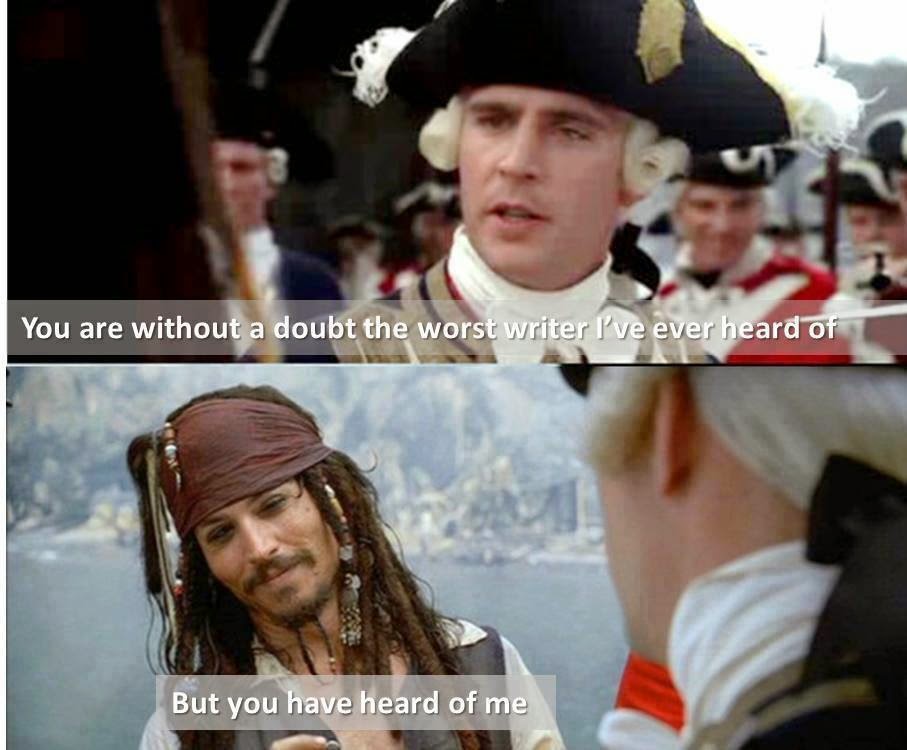
#IWSG Have You Heard of This Writer?


Thanks to Alex J Cavanaugh for hosting the Insecure Writers Support Group.


Not much new for me this month other than researching the White House for my WIP Aced (Blocked #2). Did you know there’s a Red Room in the White House? (Not the Red Room of Pain, ha ha.)

I came across this and wanted to share. We can all dream of being famous:


Good luck to all those participating in A to Z. I think you all are crazy!

Uncategorized

#IWSG Controversial Topics and First Draft Angst


Time for the Insecure Writers Support Group, when we vent our troubles and encourage each other in this crazy thing called writing. I appreciate Alex Cavanaugh for his brainchild! Please join us if you dare.


How’s your work-in-progress coming along? I started writing the sequel to my college volleyball romance Blocked. This one’s titled Aced, and features the romance between a 24-year-old Mexican American med student and a 22-year-old African-American volleyball star.

I’m rather conflict averse, but I find myself exploring some controversial topics in these novels. Blocked battles political differences, and Aced explores racial differences. Though I feel uncomfortable with conflict, discussing opposing points of view can be an enlightening experience in real life. I hope to offer a balanced take on touchy subjects in my writing.

Does your first draft feel like utter crap sometimes? I try to trudge through but writing can feel so difficult some days!

Congrats to my pub sister Debra Anastasia for the success of her crazy-ass comedy Fire Down Below! She has the wildest, dirtiest sense of whack ball humor!

Uncategorized

#IWSG: Tighten Your Writing


Time for 2015’s first Insecure Writer’s Support Group, a chance to share our hopes and fears, hosted by Alex Cavanaugh.


Since starting as a writer eight years ago, I’ve grown. (I’ve gained about twenty pounds, but that’s for another post.) The kind of growth I’ll discuss today is writing skill development. While I still have so much to learn, one area I’ve improved is tighter writing.

Be gone, verbal diarrhea!

So I want to share this excellent post, 25 Ways to Tighten Your Writing by Betsy Mikel with YOU.

A few of those tips that resonate with me:

1) Stop the adverb abuse. (I was a big offender). Dump the adverbs and choose more descriptive verbs. Instead of “I moved slowly”, try “I trudged.”

2) Knock out the highfalutin’ vocabulary. When I first started writing, I wanted to impress everyone with my intelligence by using words like avocation, prescient, and anathema. Then I learned NOBODY CARES how smart I am. Readers just want a good story with compelling characters, and bigass words might interrupt the flow.

3) Use contractions, which help dialogue sound more realistic. I can’t believe how long I’d write without contractions.

The article provides a link to 200 Common Redundancies. My critique partner Nicki Elson and I felt overwhelmed by reading that list!

In 2015, may your writing be loose and your editing tight, writer friends.