Uncategorized

Five Tips for #Writing #Therapy Scenes #IWSG


Time for August’s Insecure Writer’s Support Group. Writers, learn more HERE and join us.

Hey, everyone. I’m Jennifer Lane, psychologist/author (psycho author). I do therapy on the weekdays and write on the weekends, and I can’t decide which is more fun.

Character growth is essential in any story, and I often help my characters develop through psychotherapy. Finding the balance between authentic therapy and engaging storytelling can be tricky. Here are some tips:

1) Empathy. Otherwise known as validation or good listening, empathy is reflecting the speaker’s emotion. It’s a key therapy skill, regardless of the therapist’s theoretical orientation. Here are some examples of empathy:

Client: “What’s the point?”
Therapist: “You’re feeling hopeless.”

Client: “He’s such an ass!”
Therapist: “You’re really angry at him.”

Sounds simple, right? It’s not. A lot of times we want to give advice or solve problems, when all people need is validation. Empathic listening is quite therapeutic.

2) Boundaries. Therapists’ ethical codes discourage multiple relationships with clients. If I’m your therapist, I can’t be your friend, lover, business partner, babysitter, etc. Hollywood often shows therapists shagging their clients with no negative consequences. Not realistic.

3) Diagnosis. Though some therapists don’t put much stock into psychiatric diagnosis, it’s helpful to have a somewhat accurate diagnosis for the character. I giggled when I read Christian Grey’s initial diagnoses as haphephobia (fear of being touched) and parasomnia (sleep disorders). Fortunately Ms. James did her research for a later book, diagnosing him with Post-Traumatic Stress Disorder. Here’s a good website summarizing mental health disorders.  I also like the Writers Helping Writers Emotional Wound series

4) Progress. Is it common for a huge therapeutic breakthrough to occur? An insight that changes everything for a character? Not really. While I adore this scene in Good Will Hunting, it’s not characteristic of therapy.


Change tends to be difficult and gradual, and clients are unique in their responses to therapy. Some clients feel better merely by naming or reframing the problem. Others just benefit from a private, nonjudgmental space to talk.

5) Character Development. Therapy is a wonderful vehicle to develop your characters. Is your hero funny? Write dialogue for him that makes the therapist crack up. Does your heroine try to mother everyone? Perhaps she brings tea for the therapist, or knits the therapist a hat in the winter. Character interpersonal dynamics will unfold in the therapy relationship just like any other relationship, inserting some fun into the drama.

Have you ever tried to write a therapy scene? Hopefully these tips will help.

Uncategorized

Power Pose Your Way to #Confident #Writing #IWSG


It’s July already and the rain won’t stop in Ohio, waah. How can I train for swimming in a triathlon relay when thunder closes my outdoor pool? Time for July’s Insecure Writer’s Support Group, the brainchild of Alex Cavanaugh. Join us HERE.


Last week I delivered a presentation to swim campers about ways to build their confidence. I mentioned the technique “fake it till you make it”. In other words, if you don’t feel confident, sometimes acting confident on the outside can boost confidence on the inside. Head up, shoulders back, add a smile or serene facial expression, and you’re good to go.

Then I heard about a TED talk by social psychologist Amy Cuddy that takes confident body language a step further. According to Dr. Cuddy, our nonverbals affect how others see us. But can nonverbals affect how we see ourselves?


Since I know you’re busy and may not have time to watch the 21 minute video (it’s worth it if you do have the time), I’ll summarize her research.

Holding “power poses” for just two minutes can significantly increase testosterone (feelings of power) and decrease cortisol (feelings of stress).

What are power poses? Here’s one:

Here are two more:

Are you mired in insecurity when writing? Knees knocking before pitching to a publisher? Try a power pose for two minutes and you’ll feel more assertive, confident, and optimistic!

Uncategorized

#IWSG What’s Easiest and Hardest to #Write ?

Whoops! Almost forgot this month’s IWSG in the midst of planning for trips to Chicago and Hawaii, a broken air conditioner, and installation of new carpet and sectional sofa.


Thanks to Alex J Cavanaugh for creating IWSG, and awesome co-hosts Eva Solar Melanie Schulz, Lisa-Buie Collard, and Stephen Tremp.

How’s your writing coming along? I wish it could go faster but I guess the muse can’t be rushed. I’m about 36K words into my work in progress, ACED (Blocked #2). Next up is a therapy chapter which is always easier for me to write. I throw my characters into therapy on a regular basis–I torture them so much that they need it!

I’m struggling a bit with the pacing of the romance. While it’s not insta-love, I have a tendency to rush things. I’m grateful for my critique partner Nicki Elson, who just released a wonderful romance (VIBRIZZIO). See my post below to read my review and enter the giveaway.

What type of chapters/scenes are easiest for you to write? Which are hardest?

Uncategorized

#IWSG Have You Heard of This Writer?


Thanks to Alex J Cavanaugh for hosting the Insecure Writers Support Group.


Not much new for me this month other than researching the White House for my WIP Aced (Blocked #2). Did you know there’s a Red Room in the White House? (Not the Red Room of Pain, ha ha.)

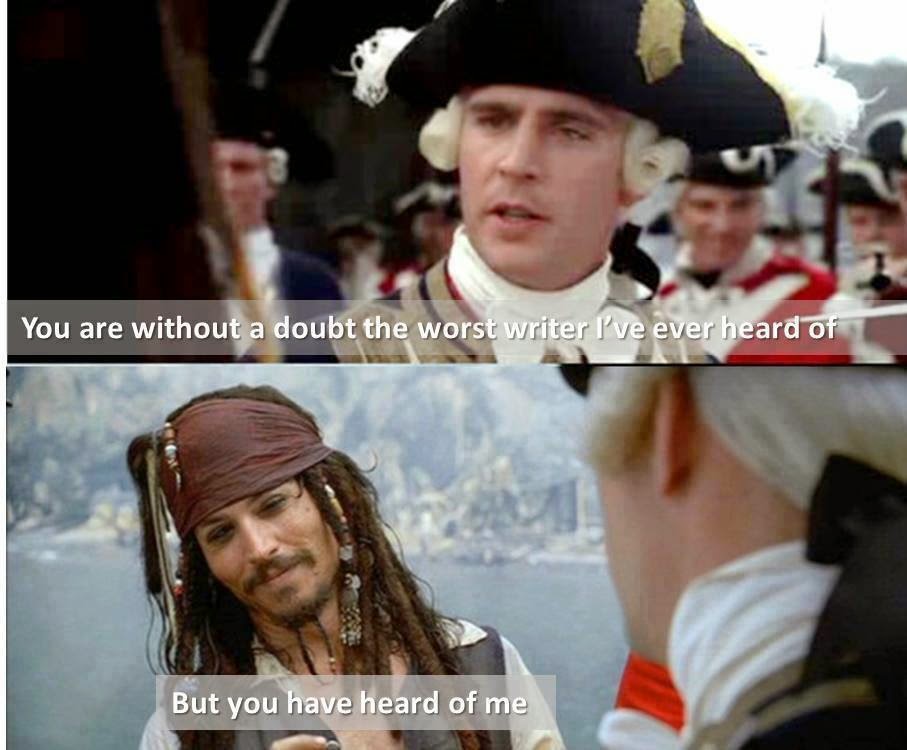
I came across this and wanted to share. We can all dream of being famous:


Good luck to all those participating in A to Z. I think you all are crazy!

Uncategorized

#IWSG Controversial Topics and First Draft Angst


Time for the Insecure Writers Support Group, when we vent our troubles and encourage each other in this crazy thing called writing. I appreciate Alex Cavanaugh for his brainchild! Please join us if you dare.


How’s your work-in-progress coming along? I started writing the sequel to my college volleyball romance Blocked. This one’s titled Aced, and features the romance between a 24-year-old Mexican American med student and a 22-year-old African-American volleyball star.

I’m rather conflict averse, but I find myself exploring some controversial topics in these novels. Blocked battles political differences, and Aced explores racial differences. Though I feel uncomfortable with conflict, discussing opposing points of view can be an enlightening experience in real life. I hope to offer a balanced take on touchy subjects in my writing.

Does your first draft feel like utter crap sometimes? I try to trudge through but writing can feel so difficult some days!

Congrats to my pub sister Debra Anastasia for the success of her crazy-ass comedy Fire Down Below! She has the wildest, dirtiest sense of whack ball humor!

Uncategorized

#IWSG: Tighten Your Writing


Time for 2015’s first Insecure Writer’s Support Group, a chance to share our hopes and fears, hosted by Alex Cavanaugh.


Since starting as a writer eight years ago, I’ve grown. (I’ve gained about twenty pounds, but that’s for another post.) The kind of growth I’ll discuss today is writing skill development. While I still have so much to learn, one area I’ve improved is tighter writing.

Be gone, verbal diarrhea!

So I want to share this excellent post, 25 Ways to Tighten Your Writing by Betsy Mikel with YOU.

A few of those tips that resonate with me:

1) Stop the adverb abuse. (I was a big offender). Dump the adverbs and choose more descriptive verbs. Instead of “I moved slowly”, try “I trudged.”

2) Knock out the highfalutin’ vocabulary. When I first started writing, I wanted to impress everyone with my intelligence by using words like avocation, prescient, and anathema. Then I learned NOBODY CARES how smart I am. Readers just want a good story with compelling characters, and bigass words might interrupt the flow.

3) Use contractions, which help dialogue sound more realistic. I can’t believe how long I’d write without contractions.

The article provides a link to 200 Common Redundancies. My critique partner Nicki Elson and I felt overwhelmed by reading that list!

In 2015, may your writing be loose and your editing tight, writer friends.

Uncategorized

#IWSG: To Series or Not To Series


Thanks to author ninja Alex Cavanaugh for his brainchild:


I want to hear your experiences with writing series. Love ’em? Hate ’em?

I have written one stand-alone New Adult sports romance and one romantic suspense trilogy. I’m considering turning my upcoming NA volleyball romance Blocked into a series.

So I have some writerly questions for you, in my deliberations. Feel free to answer none, one, or more!

1. Do you prefer to read stand-alone novels or series? Why?

2. Have you ever written a series (or plan to write one)? If so, when in the process did you realize you wanted to write a series?

3. If you like series, do you prefer the same characters as protagonists or new main characters featuring “spin-offs” in subsequent novels?

4. How do you decide to write a stand-alone or a series?

5. How many books are ideal for a series? When does a series get too long for you?

THANK YOU! Write on, my friends.

Uncategorized

Stress is Good For Us! #IWSG

Thanks to Alex Cavanaugh for starting the Insecure Writers Support Group! Learn more HERE.

I’ve been focusing on the psycho part of my psycho author career lately. I just finished a professional conference in Big Sky, Montana, and head back down the mountain today. Right now it’s -17 F! Here’s the view from my hotel room:


I presented on treating trauma in a special population, and shared my “screen door” metaphor to explain flashbacks. Check out this POST if you’re interested in how to write PTSD more accurately. It was wonderful connecting with colleagues.

One excellent TED talk I learned about at the conference is about how stress can be good for us. So if your heart’s racing, your stomach full of butterflies, your muscles tingling…those are signs your body is preparing to rise to the challenge!


Progress is slow with my WIP, and sales aren’t great. But I continue to enjoy the opportunity to create characters and stories.

How’s your month going?

Uncategorized

Insecure Writer’s Support Group #IWSG

Inspiration in Strange Places

Hey, fellow writers! *waves* 

My main insecurity this month is my book sales. Two words: They suck. 😉 

Hope you published authors out there are doing better!

But I am enjoying writing my current work-in-progress: a New Adult volleyball romance titled Blocked

I have fun finding inspiration in strange places, like my volleyball board on Pinterest. I’m proud that I worked this quote into my novel:


Where do you find random inspiration?

I’m not sure if any IWSGers will attend the New Adult Sleepover Weekend December 6-8 in Savannah, Georgia, but I WILL BE THERE! I’m super stoked to party with authors and readers.

Uncategorized

#IWSG : Favorite Personal Experience In Your Writing

Time for the Insecure Writers Support Group, started by Alex Cavanaugh.


How’s it going, writers? I’m happy with the new job I started in August, and looking forward to the holidays. Since I work for a university now, I actually get Veteran’s Day off work, yahoo!

Do you enjoy using personal experiences in your writing? I do. For example, I like to write therapy scenes incorporating my experiences as a psychologist.

I’m blessed with some hilarious friends and I like to “borrow” their dialogue now and then. When my swimming buddy Joe met my plus-sized cat, he said “That’s not a cat…that’s a cow.” Guess what one of my characters will say about his brother’s fat cat?

I’m currently writing my fifth novel, a New Adult volleyball romance titled Blocked. Although swimming was my main sport in college, I also played volleyball, and it’s a blast writing about this fun sport. My teammates and I engaged in fierce euchre tournaments, and not surprisingly this card game is making its way into the story.

What is one of your favorite personal experiences that you’ve incorporated into your writing?


If you’re feeling insecure, here’s a funny scene from the movie Young Adult to make you feel better about yourself as a writer: